Scores

The same passage — the last four measures of BWV 261, Allein zu dir, Herr Jesu Christ — engraved three times. The notes are Bach's in every case; what changes is how far each pitch is moved from equal temperament, and how that movement has to be written down.

12-tone equal temperament
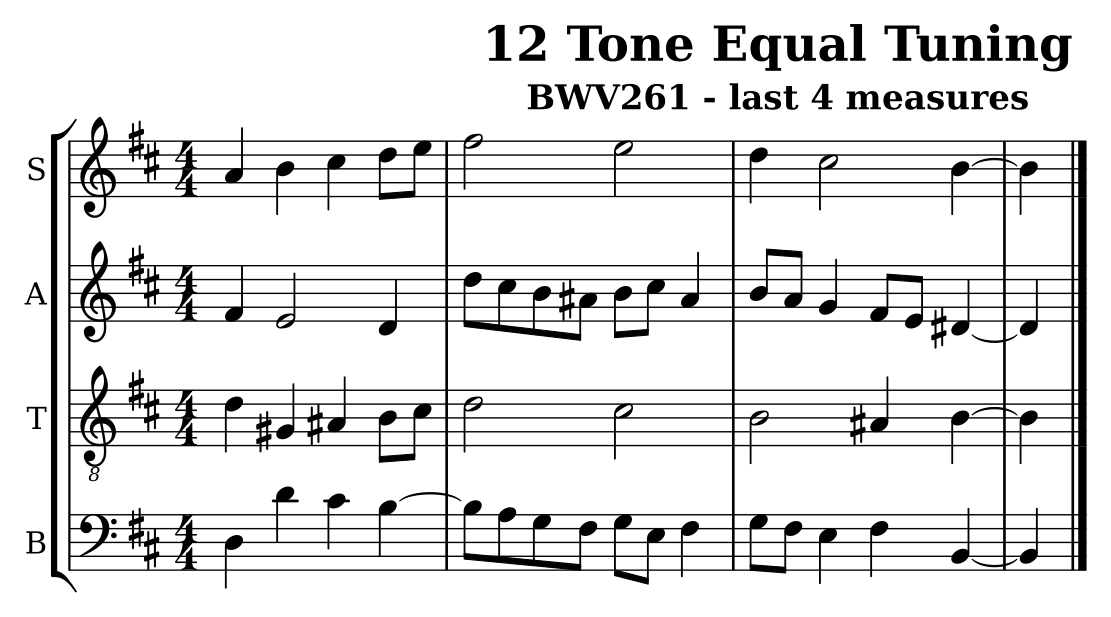
Last four measures of BWV 261 in 12-tone equal temperament, four staves marked S, A, T and B.
The control. Every semitone identical, so no pitch carries an inflection and nothing needs marking. Full page (PDF)

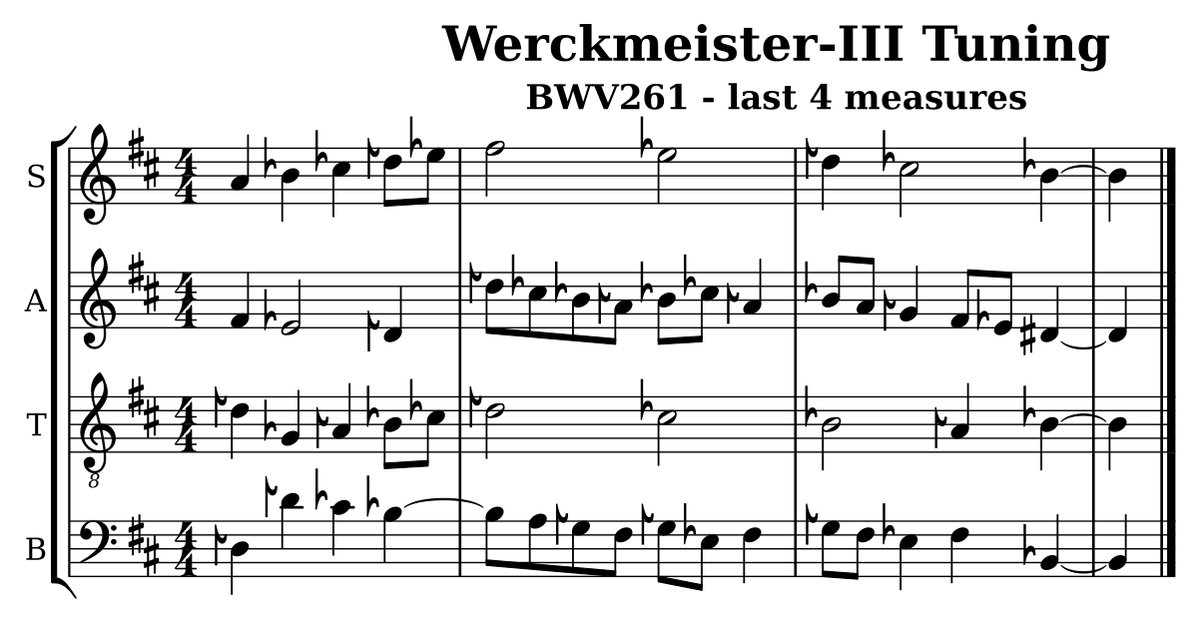
Werckmeister III

Last four measures of BWV 261 in Werckmeister III, four staves marked S, A, T and B.
A well temperament of 1691. The deviations are small enough that only a few pitches are marked. Full page (PDF)

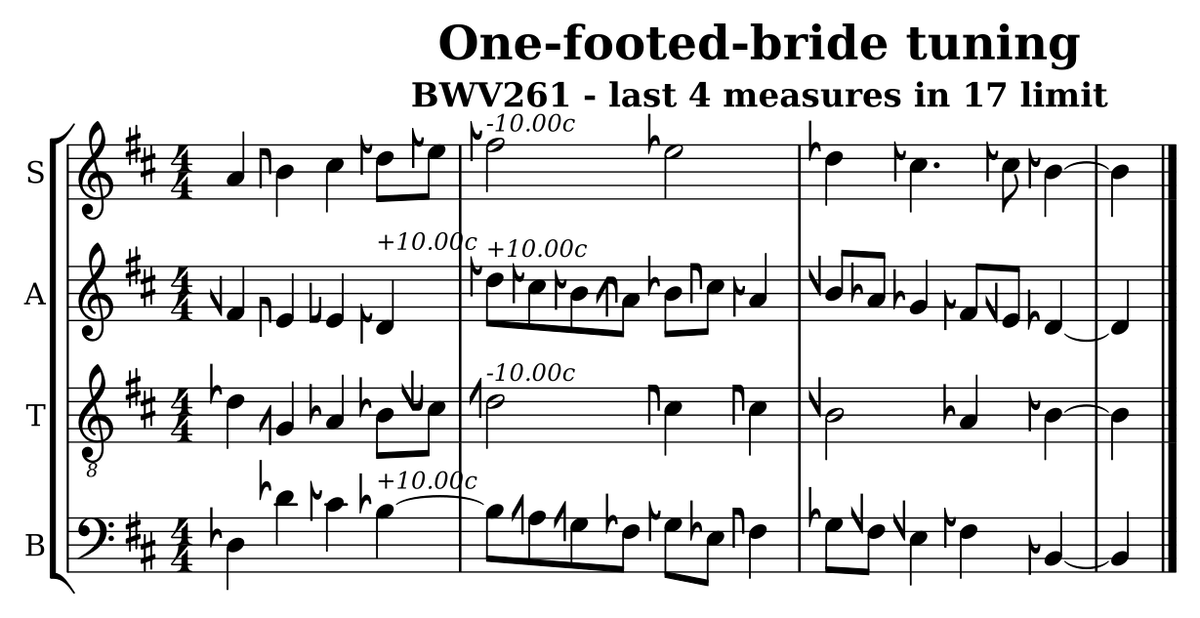
One Footed Bride Tuning

Last four measures of BWV 261 in One Footed Bride Tuning, four staves marked S, A, T and B.
The 17-limit rendering. Cent offsets are written above the staff where a pitch departs from its notated position. Full page (PDF)

Reading the accidentals

The One Footed Bride score uses Sagittal accidentals, which name an exact size in cents rather than a key-signature role. This is the legend printed with that score:
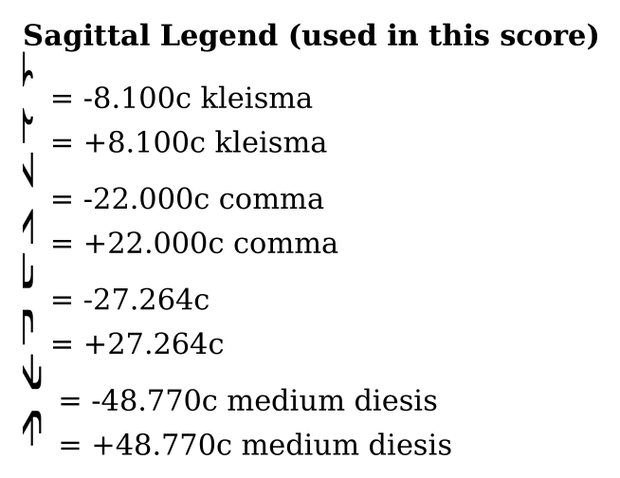
Sagittal legend: eight accidental symbols against their sizes in cents, from 8.1 cents up to 48.77 cents.

These are engravings of the tuning, not of the recordings — the audio on the listen page is rendered from the same data.